There’s a version of this question that gets a very corporate answer. Market projections. Investment figures. Buzzwords about digitization and Industry 4.0.
That’s not what I’m going to give you.
The more useful version is: what’s actually changing in laser technology that affects the people buying and running these machines? What’s different in 2026 from three years ago? And where does it seem to be heading?
Here’s what stands out.
Prices Came Down More Than Expected
This is maybe the biggest practical change for small business buyers.
Fiber laser marking machines that cost $15,000 to $20,000 five years ago are significantly cheaper now. The components got cheaper. Manufacturing scale went up. Competition increased. The result is that a capable fiber galvo machine for metal marking is accessible to a small metal shop or a one-person jewelry business in a way it wasn’t before.
Same thing happened on the CO2 side. The 80W and 100W range, which used to mean spending real money, now sits at a price point that a sign shop or gift business can actually budget for without it being a major financial gamble.
Laser technology for small business got a lot more realistic. Not free. Not cheap. But realistic.
Autofocus Got Better and More Standard
A few years ago, autofocus on a laser machine was a feature you paid extra for on mid-to-high-end models. On cheaper machines, you set focus manually. Every time. Every material thickness change.
Now autofocus is much more common across price ranges. It’s on entry-level machines. It works reliably. The sensors are more accurate.
This sounds like a minor quality-of-life thing. In daily production, it’s a significant time saver. Loading a new material, running a focus test, adjusting the z-axis, locking it in, then running your job. Multiple times per shift if you’re doing mixed jobs. Autofocus removes that loop. Load. Go.
For a small shop running different material thicknesses across a workday, the cumulative time savings are real.
Laser Technology Trends: Multi-Source Machines Becoming Practical
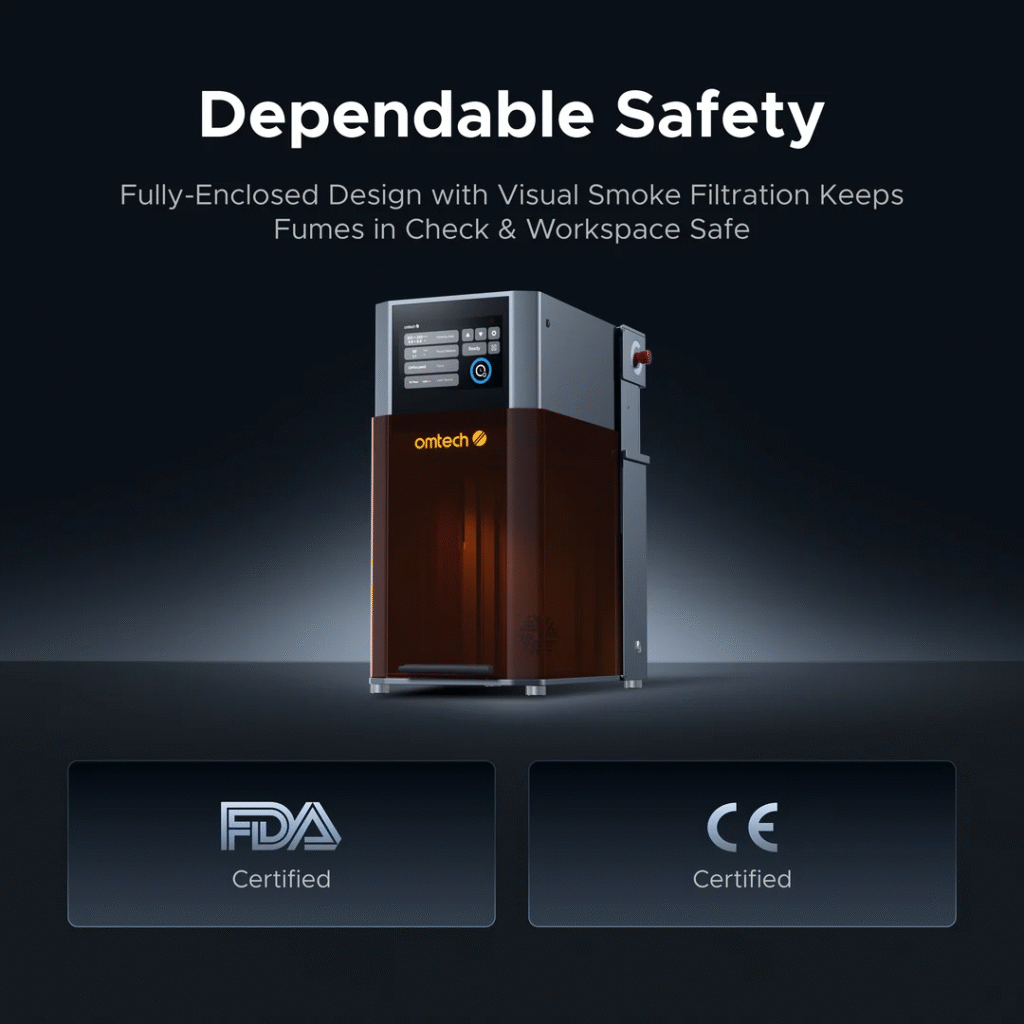
This is one of the more interesting hardware trends. Dual-source machines that combine two different laser types in one unit.
The appeal is obvious. CO2 for soft materials, fiber for metal, in one machine with one controller and one software interface. The challenge has always been making that work reliably without the machine becoming more trouble than two separate units.
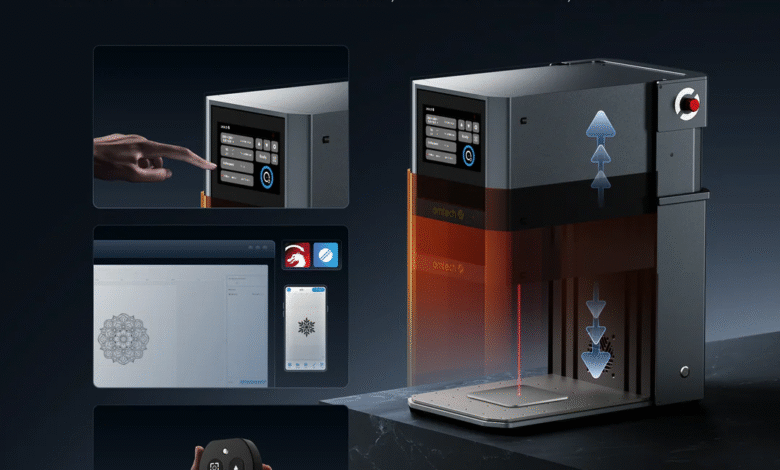
OMTech’s Solis Duo series combines fiber and diode laser in a single engraver. Autofocus across both sources. For a shop doing mixed jobs on metal and non-metal materials, this is a practical option that wasn’t really available at this price point before.
Dual-source machines are still a tradeoff. They’re not as specialized as two dedicated machines. But for smaller shops without space or budget for two separate setups, they cover the range.
Laser Technology Sustainability: Less Waste, Fewer Consumables
This one is genuine, not marketing spin.
Older marking methods used ink, pads, solvents, and other consumables. Laser marking uses none of that. The source lasts for tens of thousands of hours. No ink to replace. No pads. No cleaning chemicals. No misprint waste from smeared ink or failed pad transfers.
Laser technology sustainability in manufacturing shows up in measurable ways. Lower consumable spend over the machine’s life. Less chemical waste disposal. Lower reject rates from marking failures compared to contact methods.
Fiber laser sources in particular are rated for 100,000 hours. Run one for eight hours a day, six days a week, and you’re looking at over thirty years before the source itself needs replacement. The maintenance overhead over that lifespan is minimal compared to ink-based or mechanical marking systems.
For a business tracking operational costs seriously, this matters. The upfront machine cost is higher than an inkjet printer. The total cost of ownership over five or ten years often isn’t.
Laser Technology for Manufacturing: What’s Actually Shifting
In industrial manufacturing contexts, a few specific things are changing.
Remote monitoring and diagnostics. More machines now ship with connectivity that lets service teams check machine health remotely. For shops that depend on their laser for income, knowing about a cooling issue before it causes a tube failure is worth something.
Faster marking speeds. Galvo mirror movement and controller processing both improved. The same job that took twelve seconds a few years ago might take eight seconds on a current machine. At production volume, that adds up.
Better software integration. The workflow between design software, ERP systems, and laser machine controllers got simpler. Importing a file, running a job, logging completion. Less manual step-by-step. More automated where it makes sense.
None of this is dramatic. It’s incremental. But incremental improvements in production tools compound over time.
What Hasn’t Changed: The Basics Still Matter
Here’s the counterweight to all the trend talk.
The fundamental questions are the same as they’ve always been. What material? What power? What table size? CO2 or fiber?
A shop that picks the wrong machine type because they got caught up in a feature list ends up with a machine that doesn’t do their job well. The best laser technology for small business in 2026 is still whatever matches the materials you work with and the production volume you actually have.
A 60W CO2 machine handles wood and acrylic the same way it always has. A 30W fiber galvo marks stainless steel the same way it did five years ago. The technology works. The improvements are around the edges. Get the fundamentals right first.
Browse OMTech’s CO2 laser machines collection for non-metal production needs, or the fiber laser machines collection for metal marking applications.
The Honest Outlook for Laser Technology 2026
Some things are fairly predictable.
Prices will keep dropping on established machine types. More shops will adopt laser marking as the entry cost falls further. Software will keep getting better and easier. Multi-source machines will improve.
Some things are less clear. How fast better pulse control and new wavelengths make it from research labs into commercial products. Whether UV laser technology, currently expensive and mostly in industrial production settings, starts reaching smaller shops in the next few years.
According to Wikipedia’s overview of laser engraving, the commercial laser engraving market has grown significantly as machine costs decreased and software became more accessible. The same dynamic continues. Machines that were inaccessible to small businesses five years ago are now standard equipment for a one-person shop.
The shift isn’t finished. It’s still happening.
FAQs
What is new in laser technology in 2026?
Lower prices across mid-range machines, wider availability of autofocus, more practical dual-source machines, and continued improvements in marking speed and software integration.
Is laser technology good for small business?
Yes. The price-to-capability ratio improved significantly. A CO2 or fiber laser machine that would have required a major investment five years ago is now accessible to a small shop with steady work.
What is laser technology sustainability?
Laser marking uses no consumable ink, pads, or solvents. Fiber laser sources last 100,000 hours or more. Lower ongoing consumable cost and less chemical waste compared to older marking methods.
What are the main laser technology trends to watch?
Multi-source machines combining CO2 and fiber in one unit. Remote machine diagnostics. Faster marking speeds from improved galvo controllers. Better software workflows connecting design tools to machine controllers.
Which laser type is best for manufacturing in 2026?
Fiber laser for metal marking and traceability. CO2 for wood, acrylic, and soft material production. The application determines the right choice, not the trend.