mto Explained: A Powerful Guide to Make-to-Order, Smarter Production, and Customer-Focused Business

The term mto is commonly used in business, manufacturing, supply chain planning, and production management. It stands for Make-to-Order, a production strategy where a company starts making a product only after a customer places an confirmed order. Instead of producing large quantities in advance and storing them in a warehouse, an MTO business waits for real demand before beginning production. This makes the model especially useful for customized products, expensive goods, limited-demand items, and industries where customer preferences matter more than instant availability. In a modern market where buyers expect personalization, quality, flexibility, and better value, the MTO approach has become an important part of smart business planning.
Now that you have an overview, let’s define mto in more detail.
MTO, or Make-to-Order, is a production methodology driven by verified customer demand rather than forecasts. In essence, products are manufactured in response to customer requests, whereas in traditional mass production, companies produce inventory in anticipation of future sales. In the MTO model, customer orders initiate the planning of materials, labour, machine allocation, design specifications, packaging, and logistics. This strategy is preferred in sectors requiring unique measurements, colours, technical features, or specifications.
Why mto Matters in Modern Business
The importance of MTO production has increased because customers no longer want only standard products. Many buyers now prefer goods that match their personal needs, budget, space, taste, or business requirements. For example, a customer may want custom furniture for a specific room, a machine part with exact measurements, a personalised computer setup, or clothing made in a particular size and fabric. In all these cases, producing products before knowing the exact requirements can lead to waste, additional costs, and unsold inventory. MTO helps businesses become more responsive by producing what is needed, when it is needed, and according to the customer’s order.
How the mto Process Works
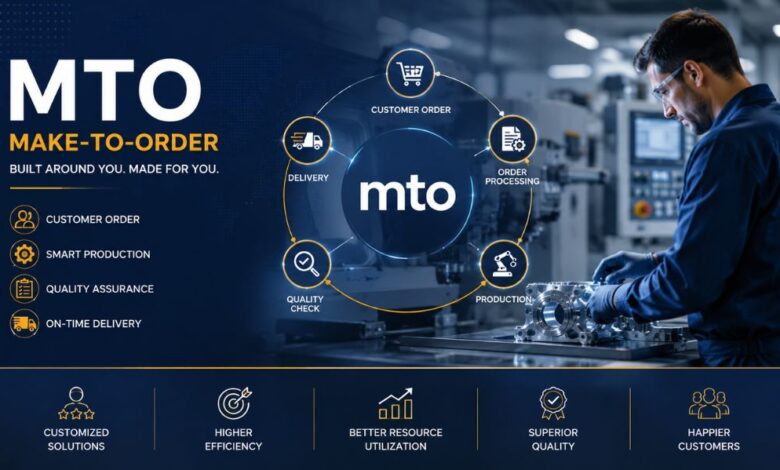
The mto process usually begins when a customer places an order with specific details. The company then reviews the order, confirms the design or specifications, checks material availability, calculates production time, and schedules the work. After that, the production team starts making the product according to the order requirements. Once the product is complete, it undergoes quality checks, packaging, and delivery. This process may take longer than buying a ready-made product, but it yields a more suitable final result for the customer. The success of MTO depends on clear communication, accurate planning, reliable suppliers, skilled workers, and strong production management.
mto vs Make-to-Stock
The biggest difference between MTO and Make-to-Stock is timing. In Make-to-Stock, companies produce goods before customers buy them. They rely on market forecasts, past sales data, seasonal trends, and demand predictions. This method is useful for fast-moving products such as common household goods, packaged foods, basic clothing, and everyday retail items. However, if demand predictions are wrong, the business may face overstock, storage costs, discounts, or waste. In MTO, production starts after the order is placed, so the risk of unsold finished goods is much lower. The trade-off is that customers may have to wait longer because the item is not already in stock.
mto vs Assemble-to-Order
Assemble-to-Order is a middle path between Make-to-Order and Make-to-Stock. In this model, companies keep parts or components ready, but final assembly happens after the customer order. For example, a business may keep computer processors, screens, memory cards, and keyboards in stock, then assemble the final computer based on the customer’s chosen configuration. MTO goes deeper because production may begin with raw materials or at an early stage of manufacturing after the order is received. Assemble-to-Order can be faster, while MTO can offer more customisation. The right choice depends on product complexity, customer expectations, lead time, cost, and the level of personalisation required.
Main Benefits of mto
One of the strongest benefits of MTO is reduced inventory risk. Since products are made only after orders are confirmed, businesses do not need to store large quantities of finished goods. This helps reduce warehouse costs, product damage, outdated stock, and wasted materials. Another benefit is better customisation. Customers can receive products that better fit their needs, thereby increasing satisfaction and loyalty. MTO can also improve cash flow in some cases because businesses produce only in response to real orders, rather than spending money on goods that may not sell. For companies selling high-value or specialised products, this model can protect profit margins and support a more premium brand image.
Challenges of mto
Although Make-to-Order has many advantages, it also has challenges. The most common issue is a longer delivery time. Customers may need to wait days, weeks, or even months depending on the product. This can be a problem in markets where buyers expect fast shipping. Another challenge is production planning. Since each order may differ, the business must carefully manage materials, workers, machines, and deadlines. MTO can also incur higher unit costs because products are often made in smaller quantities rather than in large batches. If supplier delays happen, the entire order can be affected. That is why strong coordination is essential for successful MTO operations.
Industries That Use mto
Many industries use MTO because their products are hard to standardise. Examples include custom furniture, luxury clothing, industrial machinery, construction materials, printing, specialised electronics, automotive parts, medical equipment, and aerospace components. In these fields, customers need products with exact specifications. MTO is also common in small businesses offering handmade or personalised goods, like tailors, carpenters, jewellers, or specialist equipment makers, who wait for order confirmation before producing the item.
Why Customers Like mto
Customers are drawn to MTO products due to their enhanced personalisation and utility. While standard products may offer convenience, they frequently fail to meet precise customer requirements. MTO enables clients to influence variables such as size, colour, material, style, features, and finish, fostering a stronger emotional connection to the product. This customisation can increase perceived value, particularly in premium markets, where exclusivity and tailored service are key differentiators. Buyers may be more receptive to extended lead times if the end product aligns closely with their expectations and quality standards.
Why Businesses Choose mto
Businesses choose a to-order strategy when they want to avoid the risks of overproducing inventory or when their products require customisation. For companies selling expensive or complex items, producing in advance can be risky because one unsold product may tie up a large amount of money. MTO allows the business to focus resources on confirmed sales. It can also help companies offer wider product variety without keeping every possible version in stock. For example, a business may offer different materials, colours, sizes, and finishes, but only produce the version the customer actually orders. This flexibility can make the company more competitive.
MTO and Supply Chain Management
Effective supply chain management is essential in the make-to-order (MTO) model, as production relies on prompt access to required materials and components. The unavailability of raw materials can lead to order delays, underscoring the need for MTO businesses to collaborate closely with suppliers, maintain precise inventory records, and accurately forecast material requirements, even when final production is order-driven. Robust supplier relationships enhance the speed and reliability of the MTO process. Additionally, leveraging digital systems and real-time order tracking can further optimise performance. Without diligent supply chain oversight, the MTO model risks inefficiency, elevated costs, and increased management complexity.
mto and Customer Experience
Customer experience plays a central role in Make-to-Order because the buyer is often involved before production starts. Clear communication is necessary from the beginning. The company should explain available options, expected delivery time, price, customisation limits, return policy, and production stages. If customers understand the process, they are more likely to wait patiently. However, if the company promises unrealistic delivery dates or fails to update the customer, dissatisfaction can grow quickly. A strong MTO business keeps customers informed, carefully confirms details, and delivers exactly what was agreed. Trust is one of the most important parts of this model.
mto in E-Commerce
The rise of online shopping has made mto e-commerce more popular. Many online stores now sell personalised gifts, custom clothing, printed products, handmade goods, furniture, accessories, and design-based items. Customers can select options directly on a website, preview designs, enter names or measurements, and place an order. After payment is received, the business begins production. This model allows online sellers to offer many product variations without keeping every version in stock. However, e-commerce MTO also requires accurate product pages, clear photos, detailed descriptions, and honest shipping timelines. If the website is confusing, customers may enter incorrect details, leading to delays or returns.
Best Practices for MTO Success
A successful MTO system needs strong planning, clear order management, accurate pricing, trained staff, and reliable suppliers. Businesses should define which parts of the product can be customised and which cannot. They should also calculate production time realistically and avoid overpromising. Standardising some internal processes can help reduce delays while still allowing customisation. For example, a company may offer custom colours and sizes but use a fixed production workflow. Quality control is also essential because customised products may be harder to resell if the customer rejects them. Every order should be checked carefully before production begins and before delivery.
Conclusion
MTO is a powerful production strategy for businesses that want to reduce inventory risk, offer customisation, and respond directly to customer demand. It is especially useful for products that are expensive, personal, technical, or difficult to forecast. While the model can create longer lead times and more complex planning, it can also improve customer satisfaction, reduce waste, and support a more flexible business approach. The key to success is balance. Companies must combine customisation with efficient systems, strong communication, reliable supply chains, and realistic delivery promises. In a market where customers value personal choice and businesses want smarter inventory control, Make-to-Order remains a highly relevant and valuable model.
(FAQs)
What does MTO mean?
MTO usually means Make-to-Order, a production method in which a company begins producing a product only after receiving a customer order. It is commonly used in manufacturing, supply chain management, e-commerce, and customised product businesses.
Is mto better than Make-to-Stock?
mto is better when products are customized, expensive, or difficult to predict. Make-to-Stock is better when demand is stable and customers expect immediate delivery. The best model depends on the product type, customer expectations, and business goals.
What is an example of mto?
A good example of MTO is custom furniture. The customer chooses the size, material, colour, and design, and the business starts making the furniture only after the order is confirmed. Tailored clothing and personalised gifts are also common examples.
What are the main disadvantages of MTO?
The main disadvantages of MTO are longer delivery times, more complex planning, potential supplier delays, and higher production costs for small batches. Businesses must manage customer expectations carefully to avoid dissatisfaction.
Why do companies use MTO?
Companies use MTO to reduce unsold inventory, offer personalised products, improve resource use, and produce goods based on real customer demand. It helps businesses avoid waste and gives customers more control over the final product.