For years, Georgia sat just outside the spotlight of European travel — overshadowed by better-known neighbors and often confused with the American state of the same name. That is changing fast. Nestled at the crossroads of Europe and Asia, wedged between the Black Sea and the Caucasus Mountains, this small country is emerging as one of the most rewarding destinations for travelers who want dramatic landscapes, ancient culture, and world-class food and wine, all without the crowds that have overtaken so many classic European cities.
Whether you’re a first-time visitor or a seasoned traveler looking for something genuinely different, here’s why Georgia deserves a spot on your travel list — and how to make the most of it.
A Country Where Wine Was Born
Most wine lovers know about Bordeaux, Tuscany, and Napa. Far fewer know that winemaking itself may have originated in Georgia roughly 8,000 years ago. Archaeologists have traced the world’s oldest evidence of wine production to this region, and the tradition is still very much alive today.
Georgian wine is made using a method found almost nowhere else: grapes, skins, stems, and seeds are fermented together in large clay vessels called qvevri, which are buried underground. The result is a style of wine — particularly the amber (or “orange”) whites — that tastes unlike anything produced in Europe’s more famous wine regions. In the Kakheti region, family-run wineries welcome visitors for tastings that often turn into multi-hour feasts, complete with homemade cheese, fresh bread, and more toasts than you can count.
Tbilisi: Old World Charm Meets Modern Energy
Georgia’s capital, Tbilisi, is a city of contrasts. Wander through the Old Town and you’ll find balconied wooden houses leaning into narrow cobblestone streets, sulfur bathhouses with domed brick roofs, and a hilltop fortress overlooking the Mtkvari River. A few blocks away, sleek cafes, contemporary art galleries, and a growing nightlife scene reveal a city that’s rapidly modernizing while holding onto its identity.
Don’t miss a ride on the cable car up to Narikala Fortress at sunset, or a soak in the natural hot sulfur baths in the Abanotubani district — a tradition locals have followed for centuries. Tbilisi is also an excellent base for day trips into the surrounding wine country and mountain villages, many of which are only an hour or two away by car.
The Caucasus Mountains: Hiking Without the Crowds
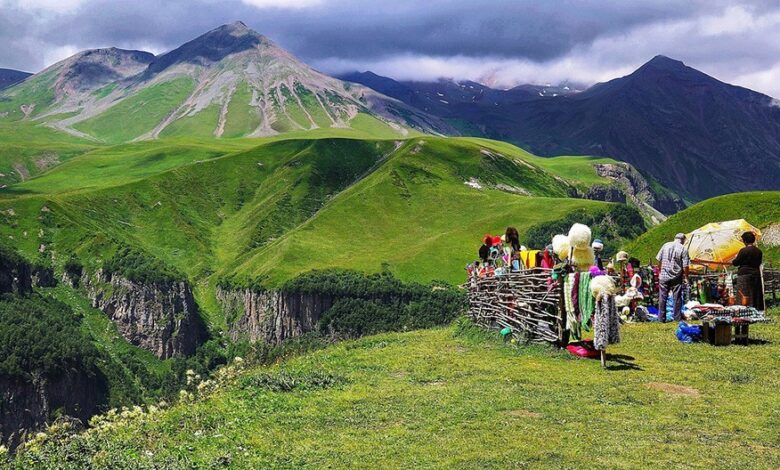
If Tbilisi is Georgia’s cultural heart, the Caucasus Mountains are its soul. The Svaneti region, in particular, feels like stepping into another century. Remote mountain villages dotted with medieval stone defensive towers cling to valleys surrounded by some of the tallest peaks in Europe, including Mount Shkhara.
The trekking here rivals anything in the Alps or the Dolomites, but with a fraction of the foot traffic. Trails wind past glaciers, alpine meadows, and villages where families still herd cattle using centuries-old methods. Kazbegi, another popular mountain region, is famous for the iconic Gergeti Trinity Church, perched dramatically on a hilltop with the peak of Mount Kazbek towering behind it.
Because infrastructure and signage can be limited outside the major tourist routes, many visitors choose to explore these regions with a local guide rather than navigating independently. Guided georgia tours are a popular way to experience the Caucasus safely and efficiently, especially for travelers with limited time who still want to reach the more remote villages and trailheads without the logistical headache of arranging transport and permits on their own.
Food That Deserves Its Own Trip
Georgian cuisine is reason enough to visit the country, even if you skip the mountains and monasteries entirely. Khachapuri — a boat-shaped bread filled with cheese and topped with a runny egg and butter — has become an Instagram sensation in recent years, but it’s only the beginning. Khinkali, Georgia’s answer to dumplings, are twisted at the top into a little knob (traditionally left uneaten) and filled with spiced meat broth that bursts when you bite in.
Meals here are social events, often built around a supra — a traditional feast presided over by a toastmaster, or tamada, who leads rounds of elaborate toasts to family, friends, ancestors, and peace. Vegetarians are especially well served, thanks to a rich tradition of walnut-based sauces, roasted eggplant dishes, and bean stews that predate any modern plant-based food trend.
Regional variation adds another layer worth exploring. Adjaran khachapuri, shaped like an open boat rather than the round or square versions found elsewhere, is distinct enough from other regional styles that it’s often treated as its own dish entirely. Megrelian cuisine, from the western lowlands, tends to be spicier and more heavily reliant on corn-based bread, while mountain regions like Svaneti favor heartier, meat-forward dishes suited to a colder climate and shorter growing season.
Ancient Monasteries and a Complicated History
Georgia claims to be one of the first nations to adopt Christianity as a state religion, back in the early 4th century, and its religious architecture reflects over 1,600 years of continuous tradition. Cave monasteries carved into cliffsides, like Vardzia in the south, and hilltop cathedrals like Jvari near Mtskheta offer both striking visuals and a window into how deeply religion is woven into Georgian identity.
The country’s more recent history is more turbulent — decades under Soviet rule, followed by a difficult transition to independence in the 1990s, and an ongoing territorial dispute in the breakaway regions of Abkhazia and South Ossetia. Museums in Tbilisi, including the Museum of Soviet Occupation, offer visitors a candid look at this recent past, and locals are often remarkably open to discussing it with curious travelers.
The Black Sea Coast: Georgia’s Overlooked Beach Escape
While the mountains and vineyards tend to dominate the conversation about Georgia, the country’s Black Sea coastline is worth its own detour. Batumi, the largest coastal city, has reinvented itself over the past two decades from a sleepy port town into a strange and fascinating mix of Soviet-era architecture, glass skyscrapers, and a boardwalk lined with palm trees.
South of Batumi, the pace slows considerably. Villages in Adjara’s highlands produce their own distinct cuisine and dialect, and the Mtirala rainforest offers hiking trails through dense, moss-covered forest that feels a world away from the arid vineyards of Kakheti just a few hours inland.
Getting Around: What to Expect on the Ground
Public transport in Georgia is inexpensive but can be an adventure of its own. Marshrutkas — shared minivans that run fixed routes between cities — are the backbone of budget travel here, though they rarely run on a fixed schedule and tend to leave once full rather than at a set departure time. Long-distance trains connect Tbilisi with Batumi and a handful of other cities, and are generally more comfortable, if slower, than the minivans.
Road conditions vary enormously: the highways connecting major cities are generally well maintained, but the mountain roads into Svaneti, Tusheti, and parts of Kazbegi can be narrow, unpaved, and occasionally closed after heavy rain or snow, particularly outside the summer months.
Where to Stay: From Family Guesthouses to Boutique Hotels
Accommodation in Georgia ranges from ultra-budget to genuinely luxurious, often within the same neighborhood. In Tbilisi, restored 19th-century townhouses in the Old Town have been converted into boutique hotels. Just outside the historic core, a wave of design-forward hostels and mid-range hotels cater to the growing number of digital nomads who have discovered Tbilisi’s low cost of living and relaxed visa rules.
In the countryside, family-run guesthouses remain the norm rather than the exception. Staying with a local family in Kakheti or Svaneti often means home-cooked meals made from whatever the family is growing or raising that season, and conversations over dinner that can turn into an impromptu lesson in Georgian hospitality.
Practical Tips for Visiting
Georgia is inexpensive relative to Western Europe, visa-free for citizens of most Western countries for up to a year, and increasingly easy to reach thanks to expanding flight connections through Tbilisi and Kutaisi airports. The best travel windows are late spring (May–June) and early fall (September–October), when mountain trails are accessible and the wine harvest is either approaching or in full swing.
A rental car gives you flexibility for the wine regions around Kakheti, but mountain roads in Svaneti and parts of Kazbegi can be rough, occasionally requiring 4×4 vehicles, especially outside peak season. Currency is the Georgian lari, and while cards are widely accepted in Tbilisi and Batumi, cash is still preferred in smaller towns and mountain villages.
Planning a First-Time Itinerary
For a first visit, most travelers benefit from a loose structure rather than a rigid schedule. A common approach is to spend two or three days acclimating in Tbilisi, using the city as a base for a day trip into Kakheti wine country before heading toward the mountains. From there, four to five days split between Kazbegi and Svaneti allows enough time to actually enjoy the hiking rather than rushing between viewpoints, and a shorter one or two day stop in Batumi on the way back toward the airport rounds out a two-week trip nicely.
Final Thoughts
Georgia doesn’t fit neatly into the usual categories travelers use to plan a trip. That in-between identity is exactly what makes it compelling: ancient wine culture, dramatic alpine scenery, deeply hospitable people, and a food scene that rivals countries many times its size — all still relatively undiscovered by mass tourism.
For travelers tired of fighting crowds at overexposed destinations, Georgia offers something increasingly rare: a place that still feels like a discovery.