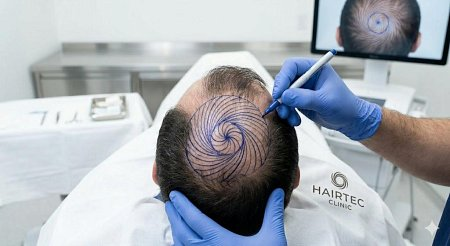
What Are the Clinical Options for a Crown Hair Transplant? Thinning at the vertex often presents a unique challenge due to the circular growth pattern of the hair. This specific region requires a specialized approach to achieve natural density and coverage.
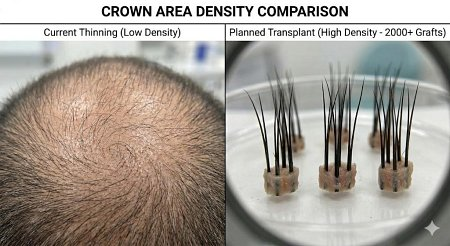
Medical teams analyze the scalp topography to determine the most effective restoration method. Modern clinical pathways focus on moving healthy follicles to the top of the head with high precision. This objective strategy confirms that the relocated hair follows the original whorl direction.
What Triggers Hair Loss at the Top of the Scalp?
Androgenetic alopecia serves as the most frequent biological cause for hair loss at the top of the head. This condition, widely recognized as Male Pattern Baldness, involves the gradual miniaturization of follicles sensitive to specific hormones. Dihydrotestosterone targets the roots at the vertex more aggressively than those at the sides or back of the head.
Patients often observe specific changes in their hair quality before the scalp becomes visible. Detecting these shifts early allows for a wider range of medical interventions. Clinical staff evaluate several key indicators during the primary scalp assessment:
- A noticeable decrease in the diameter of individual hair shafts.
- Increased visibility of the scalp skin under bright or direct lighting.
- A widening of the natural spiral pattern at the very top of the head.
- Excessive shedding of fine, miniaturized hairs during daily grooming.
- Localized inflammation or redness around the follicular openings.
Environmental stress and nutritional imbalances can further accelerate the rate of follicular decline. Low levels of iron, ferritin, or specific vitamins often weaken the hair before it even emerges from the skin. Correcting bu internal factors remains a mandatory step before any surgical planning begins. A clinical blood panel identifies these biological gaps to create a stable foundation for the restoration.
Why Is the Vertex Area Technically Challenging for Clinicians?
The hair at the crown grows in a unique spiral direction often called a whorl. Recreating this circular flow requires extreme technical precision and a deep knowledge of scalp anatomy. Surgeons must place each graft at a varying angle to match the original growth direction. A failure to mimic bu natural spiral results in an artificial and disconnected appearance.
Technical precision in this area also involves managing the specific blood supply of the upper scalp. The vertex often possesses a less robust vascular network than the frontal hairline region. This physiological reality impacts how quickly the skin heals and how well the grafts integrate into the tissue. Medical teams use specialized techniques to minimize trauma to the scalp during the implantation phase.
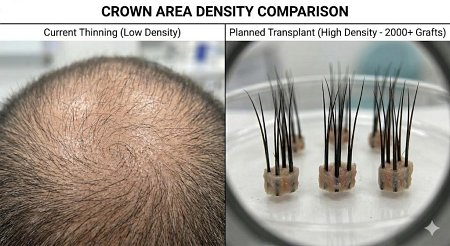
Successful restoration in the crown also requires high graft counts to cover the large surface area effectively. Clinicians evaluate several technical parameters during the planning phase to produce a unified look:
- The exact degree of angulation for every implanted follicular unit.
- The required density to blend the new grafts with existing native hair.
- The biological limit of the donor area to prevent over harvesting.
- The predicted future expansion of the thinning pattern as the patient ages.
- The texture and thickness of the donor follicles compared to the recipient area.
How Does a Professional Crown Hair Transplant Provide Results?
The surgical process involves harvesting healthy follicles from the permanent donor zone at the back of the head. These follicles possess a genetic resistance to the hormones that trigger pattern thinning. Surgeons extract individual units one by one using micro surgical tools to minimize scalp trauma. A Crown Hair Transplant then focuses on filling the thinning whorl with these healthy units.
Technical success depends heavily on how the follicles stay protected while they are outside the body. Medical staff use specialized storage solutions and strict temperature control to preserve the vitality of the harvested units. Roots are highly sensitive to physical stress and dehydration during this transition period. Constant clinical monitoring maintains a high survival rate for the grafts until they reach their new location.
Implantation involves creating tiny recipient sites that match the depth and angle of the original hair whorl. The surgical team places single hair units at the edges and multi hair units in the center for maximum volume. This layering technique creates a natural transition between the new growth and the surrounding native hair. Modern microsurgical methods allow for a much faster recovery period than older procedures.
Medical teams prioritize the following steps during the surgical session:
- Administering local anesthesia to maintain patient comfort throughout the day.
- Sorting the harvested grafts by hair count under high magnification.
- Mapping the recipient area to follow the natural spiral growth pattern.
- Inserting each graft with precision tools to avoid damaging existing roots.
- Reviewing the final placement to confirm symmetry and density levels.
Why Do British Residents Travel to Delft for Surgical Care?
High healthcare standards and structured clinical protocols lead many UK residents to seek specialized care in mainland Europe. The Netherlands maintains rigorous medical regulations and frequent clinical audits for all surgical centers. The city of Delft has established itself as a primary hub for patients requiring complex vertex restorations. British individuals travel to these Dutch facilities to access specialized surgical expertise and high tier medical technology.
A coordinated care model provides a transparent logistical path for patients traveling from the United Kingdom. Individuals complete their initial diagnostic planning and necessary blood work locally within the UK. This initial phase confirms whether a Hair Transplant is the most suitable medical path for their biological state. The actual surgical procedure occurs at the primary facility in Delft, where the core surgical team operates.
Hairtec operates using this integrated system to bridge the gap between UK consultations and Dutch surgical precision. This operational structure provides access to elite European medical teams with the convenience of local monitoring. Continuity of care remains a priority, with follow up evaluations taking place back in the United Kingdom. The dual location model combines the safety of European standards with the accessibility of local support.
Dutch clinics also focus on providing a structured environment that minimizes patient stress during the travel period. Logistical support includes assistance with local transport and coordination with nearby accommodation in Delft. This professional approach allows the patient to focus entirely on their medical procedure and initial healing. The focus remains on delivering a medical service that adheres to strict continental health protocols.
What Are the Recovery Rules for a Successful Outcome?
The first fourteen days following the procedure dictate the final success of the new grafts. Patients must follow a specific list of clinical instructions to protect the delicate follicles in the crown area. Adhering to these rules allows the skin to heal without unnecessary irritation or infection. Most patients find that the minor swelling around the scalp subsides within five days of the session.
Medical teams provide a comprehensive list of post operative guidelines for every patient:
- Refrain from touching or scratching the vertex area for ten days.
- Use a prescribed saline spray to keep the graft sites clean and hydrated.
- Avoid sleeping directly on the crown to prevent accidental follicle displacement.
- Stay away from intense physical exercise that elevates systemic blood pressure.
- Protect the scalp from direct sunlight by wearing a loose brimmed hat.
- Follow the scheduled washing protocol provided by the clinical staff.
The transplanted hairs naturally shed within the first month as the follicles enter a temporary dormant phase. This is a normal part of the biological cycle and does not indicate a failure of the surgery. New growth begins to emerge around the fourth month and continues to thicken for up to a year. Regular follow up appointments allow the medical team to monitor this progress accurately.
Comparison of Clinical Restoration Pathways
Selecting the right intervention depends on the severity of the thinning and the patient’s medical history. A medical professional reviews all viable pathways to make sure the treatment matches the biological needs of the individual. Some patients benefit from starting with non invasive options if their follicles are still active and producing hair.
| Treatment Category | Delivery Route | Targeted Patient Profile |
| Topical Solutions | Surface application | Early thinning with active roots |
| Biological Injections | Epidermal delivery | Weakened follicles needing support |
| Microsurgical Transfer | Follicle relocation | Permanent structural loss or baldness |
Clinicians often combine these methods to achieve a more comprehensive and lasting result. For example, a patient might use topical active ingredients like minoxidil or finasteride to support their native hair. This layered strategy addresses both the current thinning at the vertex and the future health of the entire scalp. Regular clinical reviews allow the medical team to adjust the strategy as the condition evolves.
Hairtec provides this integrated care model to support patients through every stage of their hair recovery. By combining Dutch surgical precision with local UK assessments, the facility maintains high success rates for complex crown cases. The focus remains on patient safety and long term aesthetic satisfaction.
Crown Hair Transplant Frequently Asked Questions
At what age should a patient consider vertex restoration?
Clinicians often recommend waiting until the age of 25 to ensure the hair loss pattern is fully established. This delay allows for a more predictable surgical plan that accounts for future biological changes.
How long do the results of a crown transplant last?
The relocated follicles come from a permanent donor zone and are genetically resistant to thinning. These hairs will continue to grow naturally for the lifetime of the patient.
Is the follicular extraction process painful for the patient?
Local anesthesia numbs both the donor and recipient areas completely before the procedure begins. Most individuals feel only a minor sensation of pressure during the extraction and implantation phases.
When can a patient return to their normal work schedule?
Most people return to light office work within three to Beş days after the surgical session. Physical activity and heavy lifting should be avoided for at least two weeks to protect the grafts.
Can a crown transplant be combined with other therapies?
Many patients use topical solutions or biological injections alongside their surgery to support native hair. This combined strategy addresses both the current thinning and the future health of the scalp.
What is the main benefit of the Delft clinical model?
Patients access high European surgical standards with the convenience of local consultations in the UK. This integrated approach ensures professional monitoring from the first check through the final recovery year.