South Indian food is often reduced to dosa and idli.
That is understandable in one way. Both are popular, easy to recognise and widely available in restaurants across India and abroad. A crisp dosa with chutney and sambar can be excellent. Soft idlis with fresh coconut chutney can be exactly right for breakfast.
But South Indian food is far broader than those two dishes.
The region includes Tamil Nadu, Kerala, Karnataka, Andhra Pradesh and Telangana, each with its own ingredients, cooking styles, spice levels, rice traditions, snacks, sweets and festival meals. Even within the same state, food can change from coast to city, village to hill station, and home kitchen to restaurant.
For travellers planning tickets to India, the south is worth considering if food is a major part of the trip. It gives you seafood, rice meals, coconut-based curries, peppery meat dishes, fiery chutneys, filter coffee, banana leaf lunches and some of the most varied vegetarian cooking in the country.
A South Indian food trip does not need to chase famous dishes only. The quieter everyday meals often tell you more.
Tamil Nadu has more depth than people expect
Tamil Nadu is often associated with dosa, idli, vada and sambar, but that is only the start.
A proper Tamil meal can be built around rice, rasam, sambar, kootu, poriyal, appalam, curd, pickle and different vegetable preparations. The balance matters. Some dishes are sharp, some are mild, some are dry, and others are soupy or comforting.
Chettinad food is one of Tamil Nadu’s strongest regional styles.
It is known for deep spice, roasted masalas, black pepper, curry leaves, fennel, star anise and rich meat dishes. Chettinad chicken is the dish many people recognise, but the wider style includes mutton, fish, vegetable curries, egg dishes and rice-based meals.
The food can feel bold without being heavy in the same way as North Indian restaurant food. The spice is layered, dry-roasted and aromatic rather than simply creamy or rich.
Tamil Nadu also has excellent snacks, from paniyaram to murukku, sundal and bajji. These are the kinds of foods you find in markets, homes, tea shops and temple towns.
Kerala brings coconut, seafood and soft spice
Kerala’s food feels different from much of inland South India.
The coast shapes the cooking. Fish, prawns, crab, coconut, curry leaves, tamarind, black pepper and rice appear often. The food can be gentle or fiery depending on the dish, but it usually has a freshness that suits the climate.
A Kerala fish curry is one of the best examples.
It may use coconut milk, raw mango, kudampuli, chilli, turmeric and curry leaves. Some versions are mellow and creamy, while others are sharper and darker. Served with rice, it can be simple but deeply satisfying.
Appam and stew are another Kerala classic.
The appam is soft in the middle with crisp edges, often served with a mild coconut-based vegetable, chicken or mutton stew. It is not loud food. It works through texture, warmth and balance.
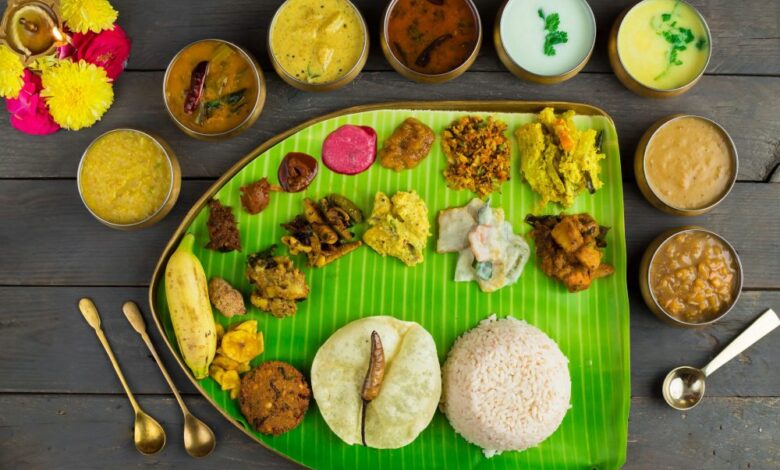
Kerala is also known for puttu and kadala curry, parotta with beef fry or chicken curry, banana chips, payasam and the Onam sadya. A sadya served on a banana leaf can include many small dishes, each doing something different.
Andhra food is not shy about heat
Andhra Pradesh has a reputation for spice, and it earns it.
The food can be hot, tangy and direct. Chillies, tamarind, gongura leaves, pickles and spice pastes appear often. Rice is central, and many meals are built around mixing rice with curries, chutneys, powders and ghee.
Gongura is one of the ingredients that gives Andhra food its character.
The leaves have a sour taste and are used in chutneys, dals and meat dishes. Gongura mutton, for example, has a sharpness that cuts through the richness of the meat.
Andhra meals can be exciting because they do not hold back.
Pickles are serious here. Chutneys are not just side items. Even a simple dal can have heat and acidity that make it stand out. If you are not used to spice, it is worth starting carefully.
But the reward is food that feels full of personality. Andhra cooking has a way of waking up the plate.
Telangana has its own food identity
Telangana shares some food connections with Andhra Pradesh, but it has its own traditions too.
Hyderabad is the obvious food centre, known especially for biryani, haleem, kebabs and rich Muslim-influenced dishes. But Telangana food goes beyond the city’s famous names.
Millets, sorghum, sesame, peanuts, tamarind and dried chillies are used in many traditional dishes. The food can be earthy, spicy and practical, shaped by climate and local agriculture.
Sakinalu, sarva pindi and pachi pulusu are examples of foods that show a different side of the region. These are not always the first dishes visitors hear about, but they help show how much regional depth exists beyond restaurant menus.
Hyderabadi biryani deserves its fame, but it should not be the only Telangana food people try.
Karnataka moves from coastal food to city snacks
Karnataka is one of the most varied South Indian food states.
In Bengaluru, you will find famous breakfast spots, filter coffee, masala dosa, rava idli, bisi bele bath, vada, khara bath and kesari bath. The city has a strong café and tiffin culture, where people stand, eat quickly and move on.
But Karnataka is not only Bengaluru.
Coastal Karnataka has fish curries, neer dosa, ghee roast, prawn dishes, coconut-based gravies and Udupi vegetarian cooking. Mangalorean food, in particular, has a strong identity, with dishes such as kori rotti, fish curry and chicken ghee roast.
Udupi food is another major strand.
It is vegetarian, temple-influenced and known for clean flavours, rice, lentils, vegetables, coconut and careful seasoning. Many South Indian restaurants across India are influenced by Udupi-style food, even when diners do not realise it.
Then there is Coorg, with pork dishes, rice preparations, pandi curry and a food culture shaped by hills, coffee and local customs.
Karnataka is a reminder that one state can hold many different food worlds.
Banana leaf meals are worth slowing down for
One of the best South Indian food experiences is a banana leaf meal.
It may be served in Tamil Nadu, Kerala, Karnataka or Andhra-style restaurants, with differences depending on region. The idea is simple: rice, curries, vegetables, pickles, papad, chutneys, sweets and sometimes buttermilk or curd served on a banana leaf.
The order matters.
Hot rice arrives first, then different gravies and sides are added. You mix, taste, adjust and move through the meal gradually. It is not meant to be rushed.
Eating with your hand, if you are comfortable doing so, changes the experience too. You feel the texture, mix the rice properly and control each bite more naturally.
For travellers, this kind of meal can explain South Indian cooking better than a single famous dish. You see balance on the leaf: sour, sweet, spicy, mild, crisp, soft, dry and wet.
Filter coffee is part of the daily rhythm
South Indian filter coffee deserves its own mention.
It is strong, milky, slightly sweet and usually served in a steel tumbler and dabarah. The coffee is poured back and forth to cool it slightly and create foam. It is simple, but when done well it becomes part of the day’s rhythm.
In cities such as Chennai, Bengaluru and Mysuru, coffee is tied to breakfast, conversation and old cafés.
It is not the same as grabbing a takeaway drink and walking away. Often, it is enjoyed standing at a counter or sitting in a busy café with a plate of tiffin nearby.
Good filter coffee is one of those small travel pleasures that does not need much explanation. You try it once in the right place, and it makes sense.
South Indian sweets are more varied than expected
South Indian sweets are sometimes overshadowed by North Indian mithai, but they have plenty to offer.
Mysore pak, payasam, adhirasam, kozhukattai, kesari, obbattu, banana halwa and coconut-based sweets all appear across the region in different forms. Some are linked to festivals, some to temples, and others to everyday sweet shops.
Payasam is especially important.
It can be made with rice, vermicelli, lentils, jaggery, coconut milk, milk, cardamom, cashews and raisins depending on the version. It may be served at the end of a meal, during a festival or as part of a sadya.
Many South Indian sweets are rich without needing heavy decoration. They rely on ghee, jaggery, coconut, milk, lentils and careful cooking.
They are worth seeking out after a meal, not just as an afterthought.
The best South Indian food is often local and specific
South Indian food cannot be properly understood through a short restaurant menu.
Dosa and idli are excellent, but they are only entry points. The real variety appears when you move between states, ask about local dishes, eat regional thalis, try coastal food, taste home-style curries and pay attention to breakfast culture.
Kerala does not taste like Tamil Nadu. Andhra does not eat like Karnataka. Hyderabad is not the whole of Telangana. Even a single city can hold several food traditions at once.
That is what makes South Indian food so interesting.
It can be light or rich, fiery or mild, vegetarian or seafood-heavy, street-side or ceremonial. It can be eaten quickly at a tiffin counter or slowly from a banana leaf.
The more you look beyond dosa and idli, the more the region opens up.