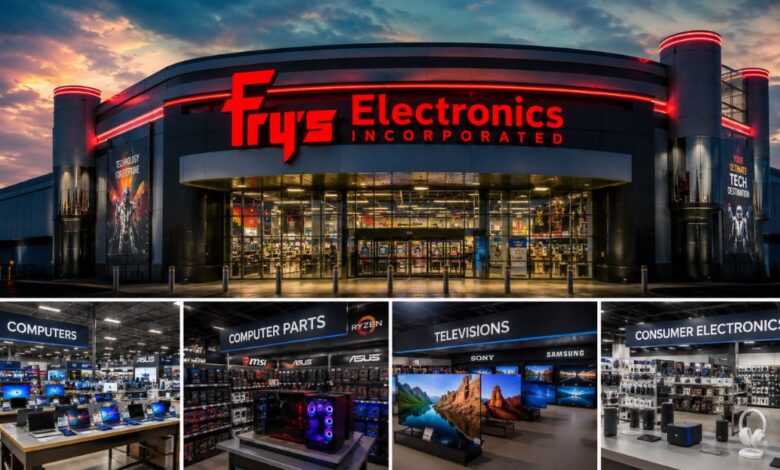
Fry’s Electronics Incorporated was once one of the most recognizable names in American technology retail. For many computer builders, engineers, students, gamers, hobbyists, and everyday electronics shoppers, the company was more than a store. It was a place where people could walk through huge aisles, compare computer parts, find unusual cables, test gadgets, and experience a retail environment that felt more like a technology museum than a typical shop. At its peak, Fry’s Electronics Incorporated represented a special era when physical electronics stores were important discovery spaces for people who wanted to understand, build, repair, or upgrade technology by hand.
The story of Fry’s Electronics Incorporated is also the story of how retail changed. The company grew during the personal computer boom, became famous for its massive stores and unusual designs, and built loyalty among customers who wanted choice, variety, and hands-on shopping. However, the same market that helped the company grow eventually moved in a different direction. Online shopping, changing consumer habits, price competition, supply challenges, and the effects of the COVID-19 pandemic all contributed to its decline. Understanding this company means looking at both its success and its closure with balance, because Fry’s left behind a real cultural and business legacy.
What Was Fry’s Electronics Incorporated?
Fry’s Electronics Incorporated was an American electronics retail company known for selling computers, computer components, consumer electronics, software, appliances, accessories, and many hard-to-find technical items. Unlike many traditional electronics stores, Fry’s was especially popular with people who wanted more than ready-made products. Customers could find motherboards, processors, memory, hard drives, circuit boards, networking equipment, cables, tools, testing devices, and repair supplies. This made Fry’s important to people who liked building computers, fixing devices, or exploring technology in detail.
The company stood out because it served both general consumers and serious tech users. A family might visit Fry’s to buy a television or printer, while a software developer might go there for storage drives, a PC builder might search for a graphics card, and an engineer might need a special connector or electronic part. This wide product range made the store feel different from cleaner, smaller, and more controlled retail competitors. Fry’s was sometimes messy, sometimes overwhelming, but always memorable. That unusual personality became part of its identity.
The Silicon Valley Beginning
Fry’s Electronics Incorporated began in the heart of Silicon Valley, a region strongly connected with computer innovation, startups, engineering, and digital culture. This location mattered because the company grew near the people who needed its products most. During the 1980s and 1990s, computers were becoming more common in homes, offices, universities, and small businesses. People were learning how to upgrade machines, install software, build custom systems, and connect devices. Fry’s entered the market at a time when technology knowledge was spreading quickly, but online shopping was not yet dominant.
The company’s early success came from understanding that technology buyers wanted selection. A normal electronics shop might offer only a few choices, but Fry’s aimed to provide many options under one roof. This approach created a strong reputation among customers who did not want to wait for mail-order catalogs or rely on limited local stock. Fry’s gave them a place to see products in person, ask questions, compare prices, and leave the same day with the exact part they needed. That immediate access helped the company become deeply connected to the tech community.
Why Fry’s Electronics Became So Popular
The popularity of Fry’s Electronics Incorporated came from a mix of product variety, store size, pricing, and atmosphere. Customers often visited Fry’s because they expected to find items that were difficult to locate elsewhere. In an age before fast online delivery was the norm, this was a major advantage. A customer building a computer could buy a case, power supply, processor, keyboard, monitor, software, and cables in one trip. That made the store useful for both planned purchases and urgent technical needs.
Another reason for its popularity was the feeling of discovery. Fry’s stores were not only places to buy products; they were places to explore. Many shoppers remember walking through long aisles just to see what was new. The company carried products that appealed to curiosity, including gadgets, unusual accessories, computer books, games, audio equipment, and technical tools. Even people who did not buy anything sometimes visited because the store itself was entertaining. That experience gave Fry’s an emotional connection with customers, which is something many retailers struggle to create.
The Famous Themed Store Experience
One of the most unforgettable parts of Fry’s Electronics Incorporated was its themed store design. Many locations featured large, imaginative interiors inspired by concepts such as space, ancient civilizations, science fiction, history, or local culture. These designs made the stores feel unique and gave customers a reason to remember each location. In a world where many chain stores look almost identical, Fry’s created retail spaces that had personality.
This themed approach turned shopping into an experience. A customer might enter a store and see giant decorations, unusual architecture, dramatic displays, or playful design details. For children and teenagers, the stores could feel exciting and strange. For adults, especially technology lovers, the environment made ordinary shopping feel like a special trip. This helped Fry’s become part of local culture in several areas. People didn’t just say they were going to buy electronics; they said they were going to Fry’s, and that meant something specific.
Products and Customers
The product mix at Fry’s Electronics Incorporated was one of its strongest features. The company sold a wide range of products, including desktop computers, laptops, computer parts, televisions, cameras, audio systems, home appliances, software, games, office supplies, and repair tools. However, its deepest identity came from its connection to computer components and technical products. For many PC builders, Fry’s was one of the few places where they could physically inspect parts before buying them.
The customer base was wide. It included students, IT workers, engineers, gamers, small business owners, families, repair technicians, and curious shoppers. This broad audience helped Fry’s grow, but it also created challenges later. As consumer electronics became simpler and online retailers grew stronger, fewer people needed to visit a large physical store for every technology purchase. Many customers started buying directly from online marketplaces, manufacturer websites, or smaller specialist retailers. Fry’s had to compete in a world where speed, price, and online convenience became more important than physical browsing.
Business Challenges and Market Changes
The decline of Fry’s Electronics Incorporated did not happen because technology became less important. In fact, technology became more important than ever. The problem was that the way people bought technology had changed. Online retailers offered a wide selection, fast shipping, customer reviews, and aggressive pricing. Big-box competitors also improved their online systems and focused on popular consumer products. At the same time, many electronics became less repairable and more integrated, which reduced the need for some do-it-yourself parts.
Another challenge was store size. Fry’s locations were often very large, which created high operating costs. Large stores need strong inventory, steady foot traffic, and effective supply chains. When shelves began to look empty in some locations, customer confidence weakened. Shoppers who once visited Fry’s for variety began to wonder whether the company still had the products they needed. In retail, perception matters. Once customers believe a store no longer has strong inventory, they may stop visiting, which makes recovery even harder.
Closure of Fry’s Electronics Incorporated
Fry’s Electronics, Inc. permanently closed its operations in 2021 after nearly 36 years of business. The company explained that changes in the retail industry and challenges connected to the COVID-19 pandemic made it difficult to continue. Its closure marked the end of a major name in American electronics retail and affected customers, employees, vendors, and communities that had known the stores for decades.
The closure felt sudden to many customers because Fry’s had been a familiar part of the technology shopping landscape for so long. Even people who had not visited recently often felt nostalgic when the news spread. The end of Fry’s reminded many shoppers that a certain type of electronics retail had disappeared. The huge, quirky, parts-filled store that welcomed hobbyists and casual visitors alike was no longer a common business model. Fry’s became a symbol of an older but beloved era of hands-on technology shopping.
Why Fry’s Still Matters Today
Even after closing, Fry’s Electronics Incorporated still matters because it influenced how many people experienced technology. Before online videos, instant reviews, and same-day delivery became common, stores like Fry’s helped people learn by browsing. Customers could compare products in person, read product packaging, speak with staff, and understand technology firsthand. For many future engineers, programmers, repair workers, and computer enthusiasts, Fry’s was part of their early learning environment.
The company also matters as a business lesson. It shows that strong brand recognition and customer nostalgia are not always enough to survive major market shifts. Retailers must adapt to changing buying habits, supply chain realities, online competition, and customer expectations. Fry’s had a powerful identity, but the market around it changed faster than the company could successfully respond. Its story is valuable for anyone studying technology retail, consumer behavior, or the future of physical stores.
Lessons from the Fry’s Electronics Story
The first lesson from Fry’s Electronics Incorporated is that experience can build loyalty. Fry’s stores were memorable because they were different. The themed designs, huge product range, and discovery-based shopping made customers feel connected to the brand. This shows that physical stores can still matter when they offer more than just product access. A store that creates curiosity, learning, and emotion can become part of people’s memories.
The second lesson is that retail must keep evolving. A company can be loved and still struggle if its model no longer matches how customers shop. Online convenience changed expectations around price, availability, delivery, and product research. Fry’s strength was the in-person treasure-hunt experience, but that became harder to maintain as more customers moved online. The third lesson is that inventory trust is essential. When shoppers visit a store expecting variety and find empty shelves, they may not return. For a retailer built on selection, stock issues can quickly damage the brand.
Conclusion
Fry’s Electronics Incorporated was not just another electronics chain. It was a unique retail brand that reflected the excitement of the personal computer era, the creativity of Silicon Valley culture, and the curiosity of people who loved technology. Its stores were large, unusual, sometimes chaotic, and often unforgettable. For many customers, Fry’s was where they bought their first computer part, explored new gadgets, found rare cables, or simply enjoyed walking through a world built for tech lovers.
Its closure in 2021 marked the end of an important chapter in the electronics retail industry. The company faced powerful challenges from online shopping, changing consumer behavior, high operating costs, and pandemic-related pressure. Still, its legacy remains strong because Fry’s gave customers an experience that modern retail rarely repeats. The story of Fry’s is both nostalgic and educational: it reminds us that great retail is about more than products, but it also shows that every business must adapt when the market changes.
(FAQs)
What was Fry’s Electronics Incorporated known for?
Fry’s Electronics Incorporated was known for its large electronics stores, a wide selection of computer parts, consumer electronics, software, and accessories, and unusual-themed store designs. It became especially popular among PC builders, engineers, gamers, and technology hobbyists.
When did Fry’s Electronics Incorporated close?
Fry’s Electronics Incorporated closed its operations in 2021 after nearly 36 years in business. The company began its wind-down process in February 2021 and permanently shut down its stores and online operations.
Why did Fry’s Electronics Incorporated close?
The company closed due to major changes in the retail industry, growing online competition, shifting customer habits, inventory challenges, and pressure from the COVID-19 pandemic. These issues made it difficult for the business to continue operating successfully.
Was Fry’s Electronics Incorporated popular with computer builders?
Yes, Fry’s was very popular with computer builders because it carried a wide range of parts and accessories, including motherboards, processors, memory, storage drives, power supplies, cases, cables, and tools. Many customers visited Fry’s because they could find technical products in person.
What is the legacy of Fry’s Electronics Incorporated?
Fry’s legacy is its status as a memorable technology retail destination. It helped customers explore electronics hands-on and became part of tech culture in many communities. Even after closing, many people remember Fry’s as a unique store that combined shopping, learning, and entertainment.