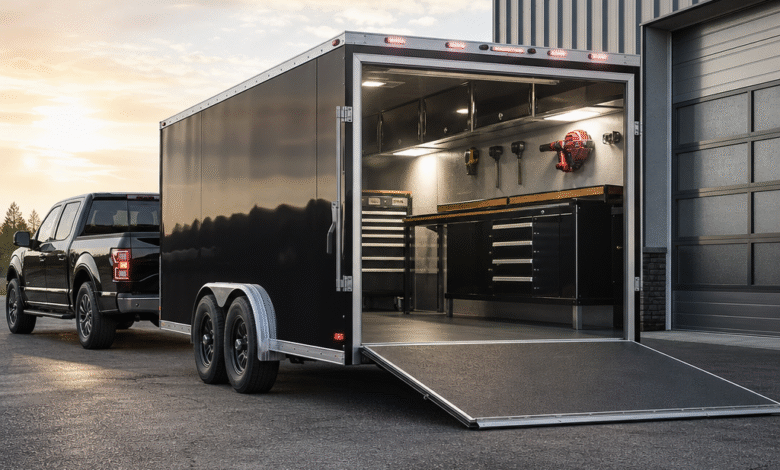
Mobile businesses are no longer a niche concept. From food vendors and contractors to event marketers and artisan craftspeople, entrepreneurs across industries are discovering that a well-equipped trailer can serve as a fully functional workspace, storefront, or transport solution. But not all trailers are created equal — and the difference between a basic utility trailer and a purpose-built enclosed unit can define whether your mobile operation thrives or struggles. Understanding how to make that transition intelligently is the first step toward building something genuinely useful on wheels.
Why Enclosed Trailers Are Gaining Ground Among Small Business Owners
The appeal of an enclosed trailer goes well beyond weather protection. For small business owners, the enclosed format offers a controlled environment for tools, inventory, and equipment — reducing theft risk, minimizing weather damage, and creating a professional appearance that open utility trailers simply cannot match. Whether you’re hauling landscaping gear, mobile retail merchandise, or event supplies, the enclosed structure adds a layer of security and versatility that pays dividends over time.
There’s also a branding dimension that many entrepreneurs overlook. An enclosed trailer is essentially a moving billboard. With the right exterior graphics and a clean, professional finish, it communicates credibility to potential clients before you’ve said a single word. This is particularly relevant for service-based businesses that operate in residential neighborhoods or commercial zones where first impressions carry real weight.
The Cost Advantage of Converting Rather Than Buying New
Purchasing a brand-new enclosed trailer from a dealership can be a significant capital investment, often running into several thousand dollars depending on size and specifications. For many small business owners operating on lean budgets, that upfront cost is a barrier. Converting an existing utility trailer into an enclosed unit offers a practical middle ground — one that allows you to control costs while still achieving a functional, professional result.
The conversion process involves more than simply bolting on walls. Structural reinforcement, proper ventilation, flooring upgrades, and interior organization all factor into a successful build. Fortunately, detailed guidance is available for those willing to invest the time. Following a thorough enclosed trailer guide can walk you through each phase of the conversion — from selecting the right framing materials to installing secure locking mechanisms — ensuring the finished product is both safe and durable.
Matching Your Trailer Build to Your Business Model
One of the most common mistakes entrepreneurs make when converting a trailer is building for the present rather than the future. A landscaping business that starts with basic equipment may eventually expand into hardscaping, requiring heavier tools and more storage. A mobile retail vendor might begin with a single product category and later diversify. Building flexibility into your trailer design from the start — through modular shelving, removable partitions, and scalable power systems — saves significant time and money down the road.
Consider also the specific demands of your industry. Food-related businesses must account for health code compliance, ventilation, and sanitation. Contractors need secure tool storage and easy access to heavy equipment. Event-based businesses may prioritize aesthetics and display space. Each use case calls for a different interior configuration, and understanding those requirements before you begin construction is essential to a successful outcome.
Technology and Marketing: The Modern Trailer Business Edge
Building the physical trailer is only part of the equation. In today’s competitive landscape, how you market your mobile business matters just as much as what you’re selling. Small businesses are increasingly turning to digital tools to stretch their marketing budgets further, and the results are compelling. According to recent reporting on how small businesses are using AI imagery to reduce marketing costs, entrepreneurs are generating high-quality visual content at a fraction of traditional production costs — a strategy that translates directly to trailer-based businesses looking to build a strong online presence without a large agency budget.
For a mobile business, this kind of digital marketing leverage is particularly powerful. Social media content showcasing your trailer setup, behind-the-scenes build progress, and day-in-the-life footage can generate significant organic reach. Pairing that content with AI-generated imagery for promotional materials creates a cohesive brand identity that looks polished and professional, even when the business is still in its early stages.
Experiential Marketing and the Mobile Business Opportunity
The intersection of mobile business and experiential marketing is one of the more exciting developments in the small business space. Enclosed trailers are increasingly being used as pop-up activation units — appearing at festivals, markets, and corporate events to deliver immersive brand experiences. This approach aligns closely with broader trends in the events industry, where face-to-face engagement continues to demonstrate measurable ROI. For entrepreneurs looking to understand where experiential marketing is heading, the Experiential Marketing Summit 2026 offers a comprehensive look at the strategies and innovations shaping the field.
For trailer-based businesses, this means thinking beyond the transactional. Rather than simply showing up to sell, consider how your trailer can create a moment — a memorable interaction that turns a first-time visitor into a loyal customer. Thoughtful design, engaging staff, and a clear brand narrative all contribute to that outcome.
About Craftsmen Industries
Craftsmen Industries is a recognized leader in custom trailer fabrication and mobile marketing solutions. With decades of experience building everything from specialty trailers to full-scale experiential marketing units, the company brings deep technical expertise and creative capability to every project. Their work spans industries including retail, food service, construction, and live events — serving clients who need mobile solutions that are both functional and visually compelling. Craftsmen Industries is known for its commitment to quality craftsmanship, attention to detail, and the ability to translate a client’s vision into a road-ready reality.
Final Thoughts: Building a Mobile Business That Lasts
Converting a utility trailer into an enclosed workspace is more than a construction project — it’s a business investment that, when done correctly, can fundamentally change how you operate and how customers perceive you. The key is approaching the process with the same level of planning and intentionality you would bring to any significant business decision. Research your materials, understand your operational needs, budget for contingencies, and think carefully about how the finished trailer will represent your brand in the field.
The mobile business model rewards those who combine practical ingenuity with strategic thinking. Whether you’re just beginning to explore the idea of a trailer conversion or you’re ready to break ground on a full build, the resources and expertise available today make it more accessible than ever to create something genuinely impressive. The road is wide open — the question is simply how well-equipped you are to travel it.